Important changes are coming to the Australian NABERS Energy framework.
Currently, the NABERS Energy framework awards buildings with star ratings from 1 to 6, based on greenhouse gas (GHG) emissions associated with 12-months operational energy use data.
In 2025, NABERS introduced an update to the electricity emissions factors that are used to calculate these emissions (as it had previously done in 2021), in recognition of a decarbonising national electricity grid. This update changed the relative GHG emissions per unit of electricity consumed, impacting the NABERS ratings for some buildings. We also saw the varying impact this had on different regions across the nation, each on their own decarbonisation journey and pace.
The Renewable Energy Indicator (REI) was also introduced in 2025. The REI displays the proportion of a building’s energy use from renewable sources, including both on-site renewable energy generated and off-site renewable energy procured. The previous reporting of star ratings with and without GreenPower contribution has now been phased out, a procurement strategy that many buildings historically used to achieve NABERS performance. Renewable energy still matters, but it is now shown separately through the REI. This gives asset owners a clearer view of how efficiently their building uses energy and how much of that energy comes from renewable sources.
Earlier this year, NABERS announced another set of major updates that will come into play in 2030. Understanding and planning for these 2030 updates will put asset owners in a stronger position when they take effect.
What’s expected in NABERS Energy 2030
From July 2030, NABERS Energy will remove GHG emissions weighting entirely. Instead, NABERS Energy ratings will be based on direct energy consumption only.
As more renewable energy enters the grid, electricity-related emissions are falling. Without a change to the framework, an all-electric building could appear to perform well simply because the grid is cleaner, even if the building operates in an inefficient manner.
This is an important update which places an even greater emphasis on the operational efficiency of buildings.
Why do I need to know about the 2030 update?
The 2030 update is designed to reward buildings that use energy efficiently rather than relying on renewable energy procurement or local emissions factors. This update is a decisive step towards recognising the decarbonising electricity grid and takes a long-term perspective on GHG emissions.
Importantly, these updates could have a significant impact to NABERS Energy ratings for existing assets if asset managers don’t prepare appropriately. Given the long lead time of major capital works projects and the complexity that will be involved with works for many older assets, the time to start that preparation is now.
What impact does electrification have on ratings under the NABERS Energy framework?
Under the current methodology, building electrification can produce mixed outcomes to existing NABERS Energy ratings. Because of the variable emissions factors of electricity across the country, electrification doesn’t always lead to lower emissions and improvement in NABERS ratings.
Under the post-2030 NABERS Energy methodology, the picture is much clearer.
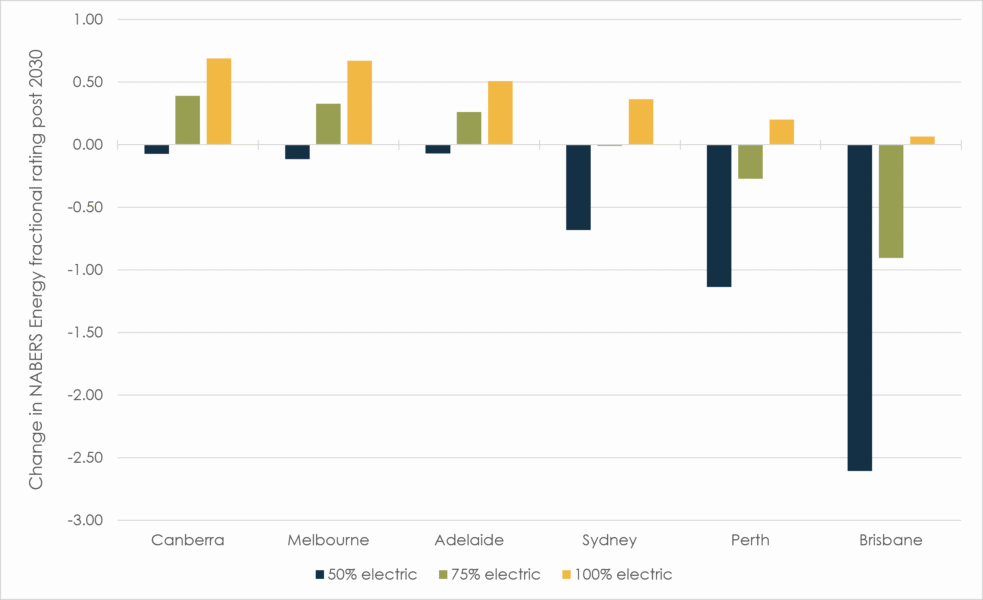
After 2030, fully electrified buildings will have a distinct advantage over mixed-fuel buildings. The greater the relative gas consumption, the greater this difference will be.
This is largely due to the inherent efficiency of electric heat pump systems. The efficiency of a gas boiler has a theoretical maximum limit of 100% (typical efficiencies range between 70 – 95%). Heat pumps, on the other hand, can achieve efficiencies of 300% to 500%, or more, by transferring heat rather than generating it. This means electric heat pump systems consume significantly less net energy, which will directly benefit NABERS Energy outcomes under the 2030 methodology.
For asset owners, electrification of existing gas systems will be a critical element of a NABERS Energy strategy. This will not only improve NABERS Energy performance but, in many cases, will be necessary for simply retaining an existing star rating.
Impact of 2025 & 2030 NABERS updates to a 5 Star building
This data assumes no changes to energy consumption.
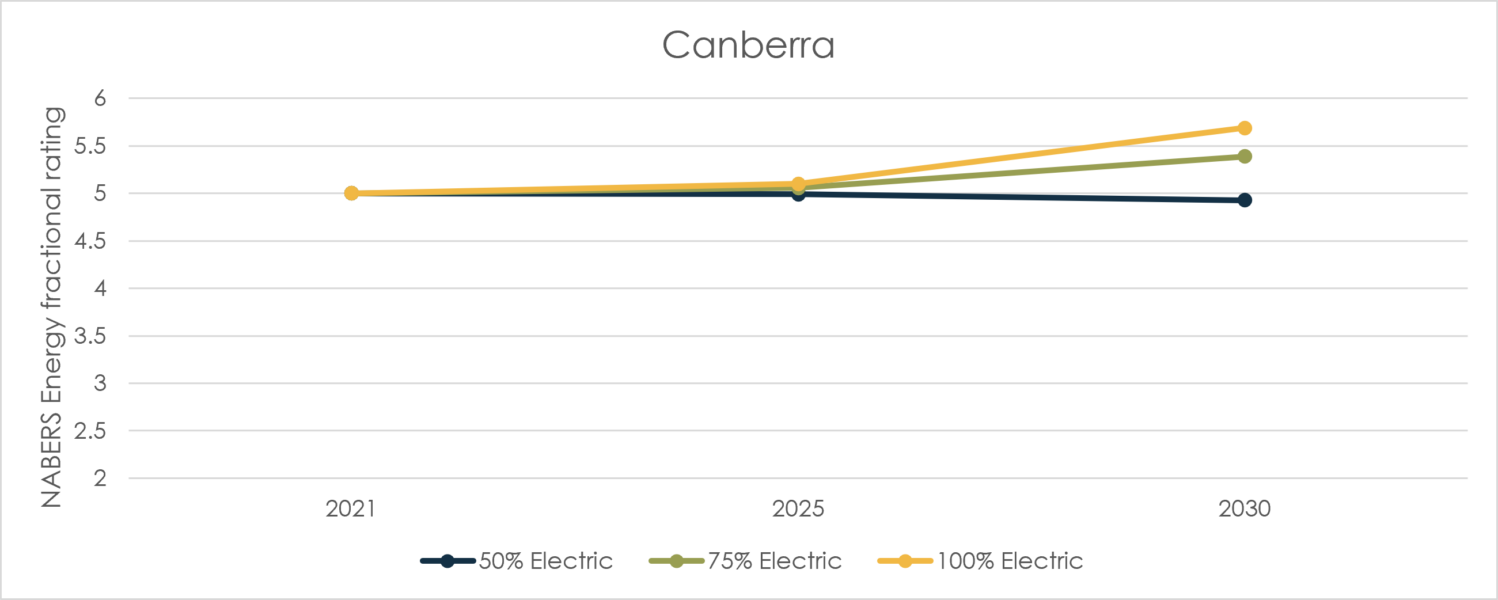
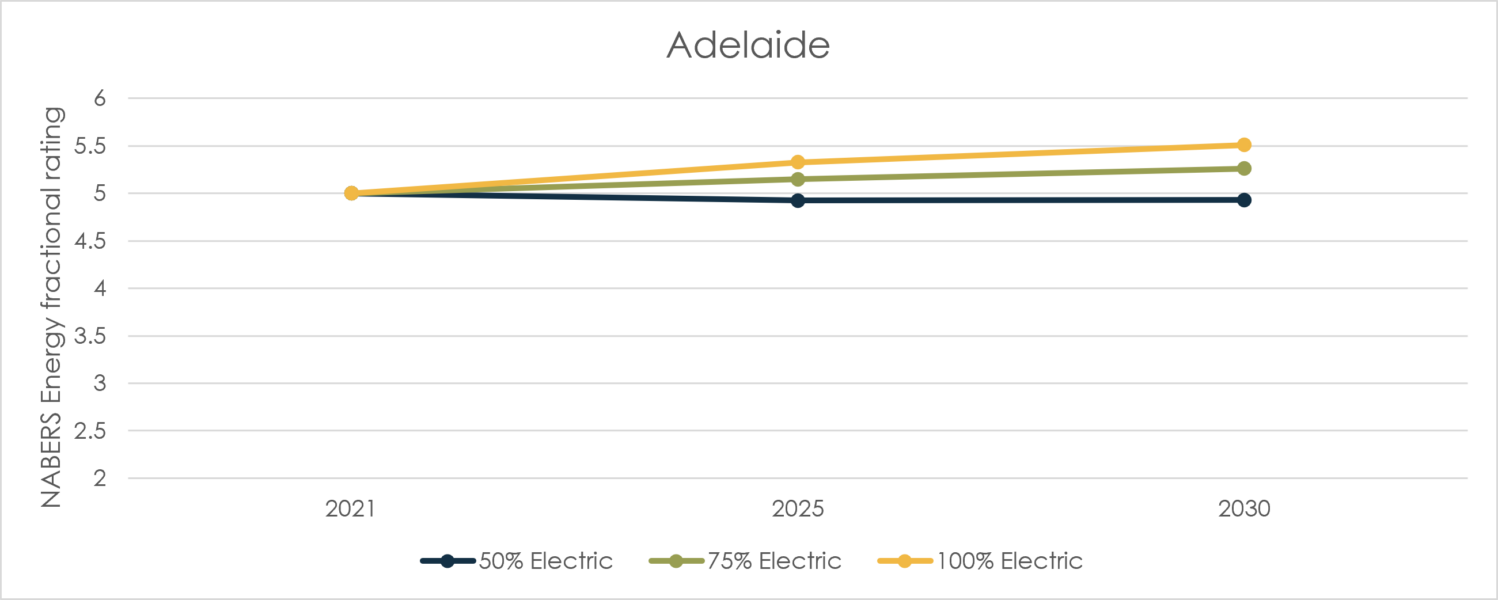
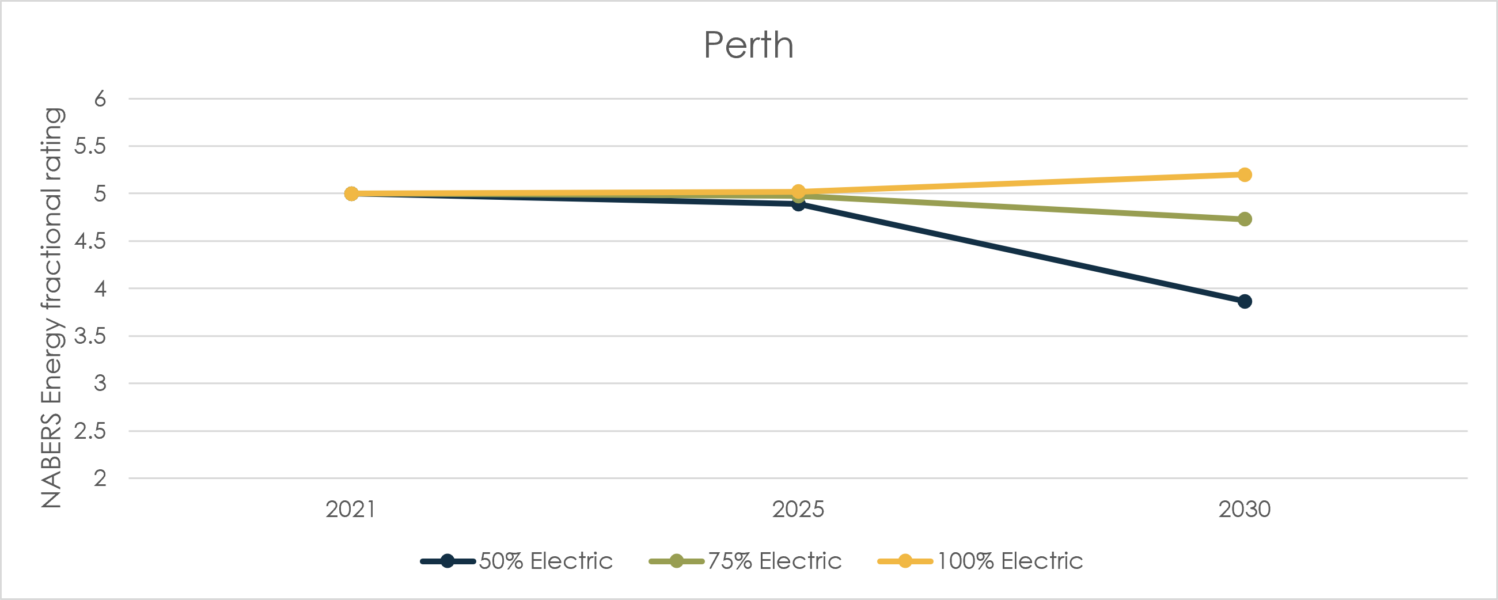
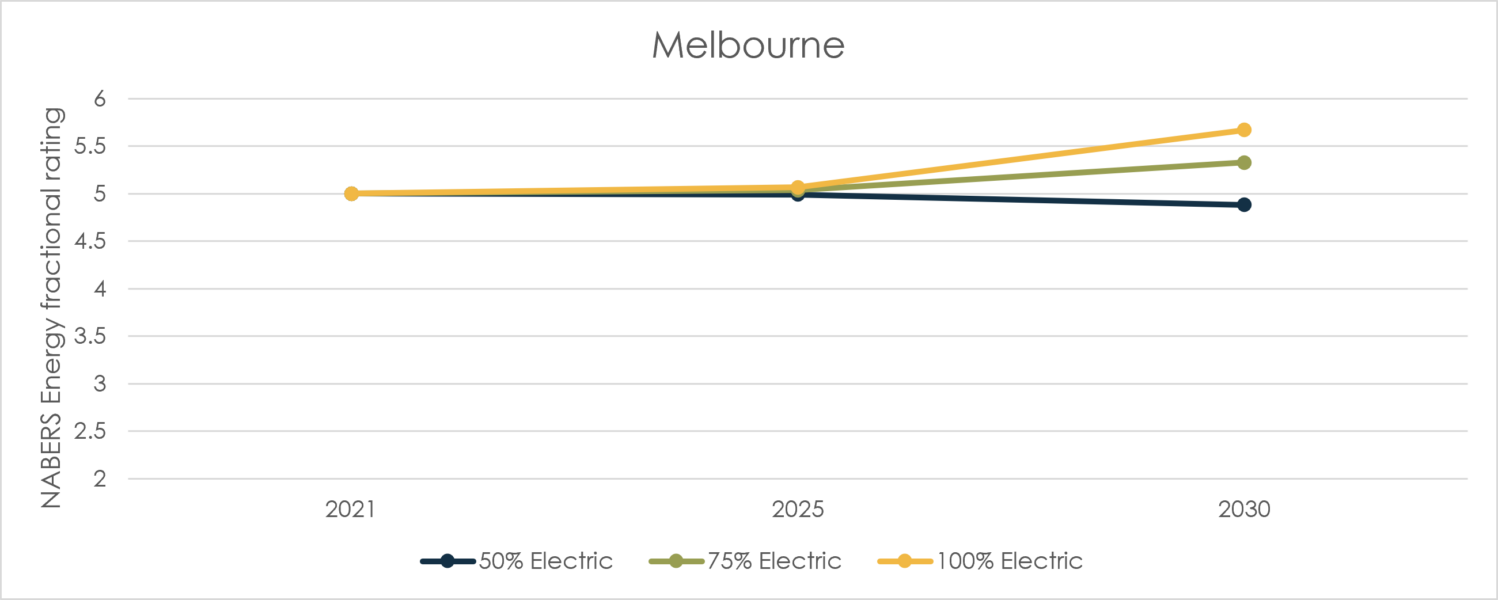
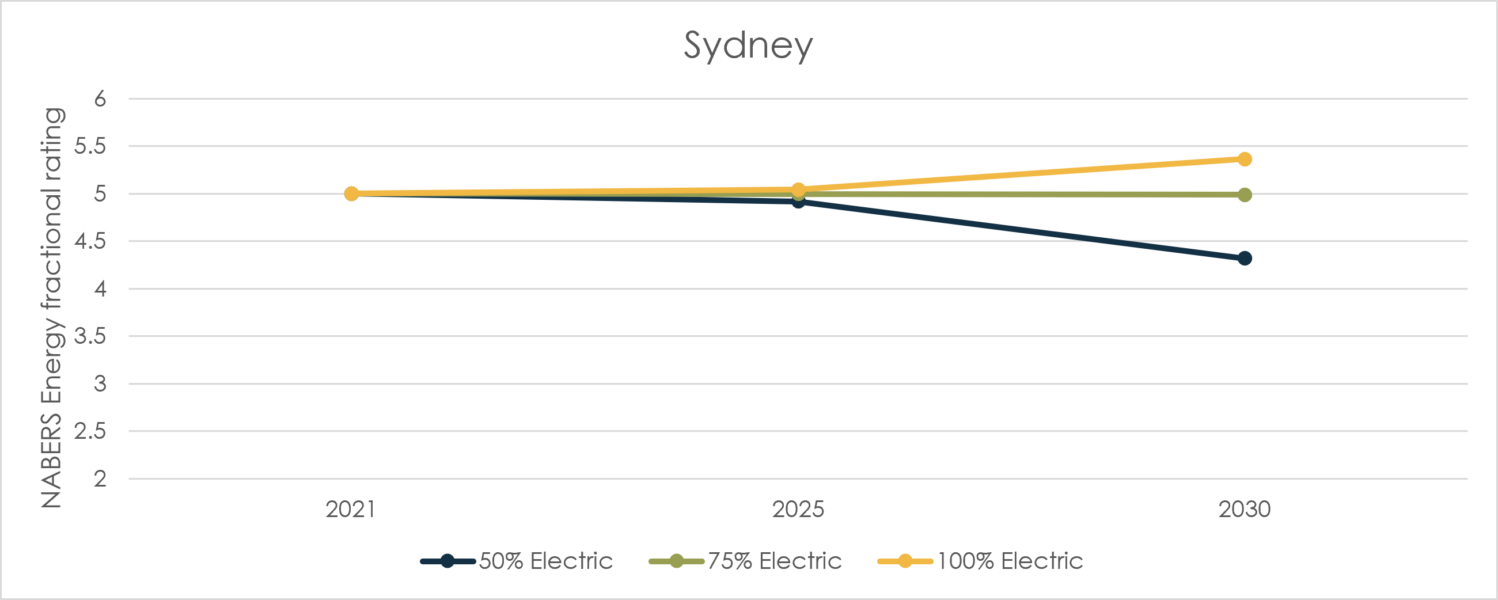
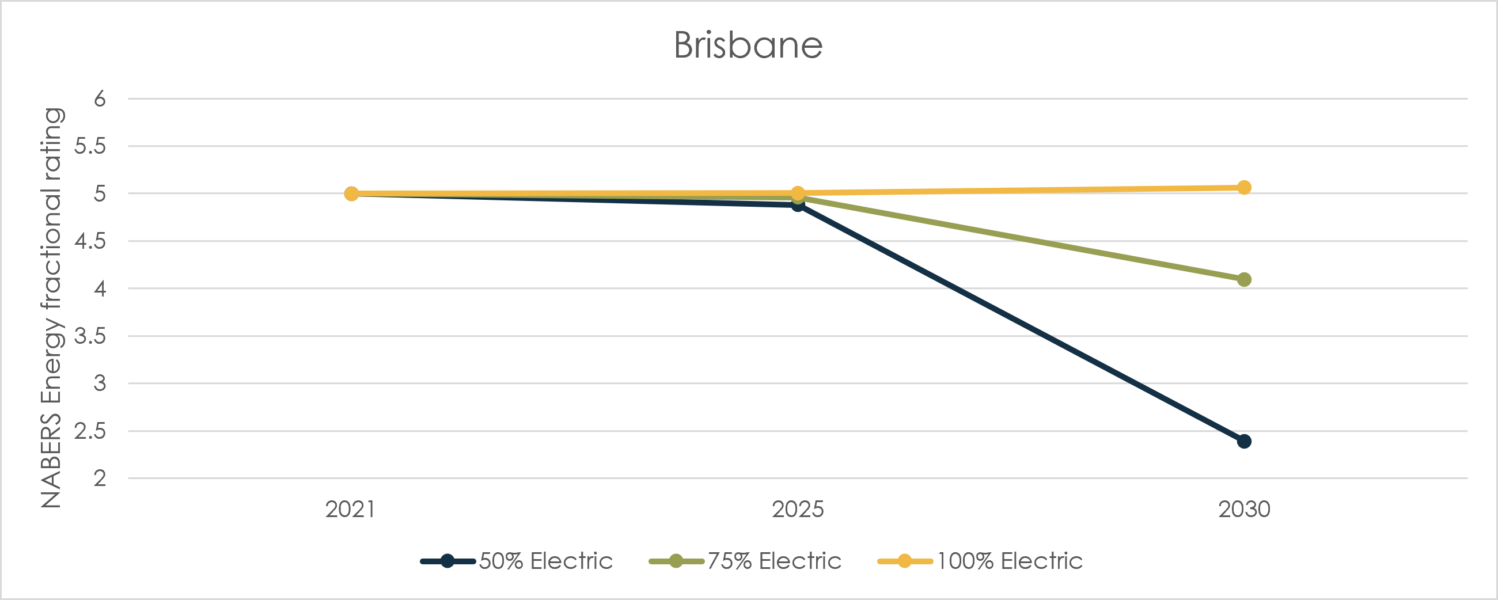
Change in NABERS Energy fractional rating post-2030
Relative to the 2021 baseline under different electrification scenarios
How to get ready for 2030
The 2030 update isn’t far away in the context of capital works planning and strong NABERS Energy performance depends on making the right decisions now. A practical preparation plan should include:
1. Understand your energy profile
Review how much energy the building uses, where it’s used and which systems are driving demand. If your building uses gas, make sure you understand your proportion of gas use and why you’re still using it.
Pay particular attention to gas-fired heating, domestic hot water, central plant, after-hours energy use, tenant loads and systems that are difficult to meter or control.
2. Modelling impact
Use the NABERS prediction tools to understand how your building may perform under the 2025 and 2030 settings. This can help identify the impacts of the upcoming 2030 changes and whether current performance is being supported by genuine energy efficiency, renewable procurement or current emissions factors.
These tools can also be used to test alternate electrification scenarios and estimate the likely impacts to your NABERS rating.
3. Develop an electrification roadmap
Electrification of existing gas infrastructure will form a key strategy for maintaining and maximising future NABERS Energy performance. If maximising your star rating is a priority, plan electrification around the 2030 update while testing alongside the broader objectives of emissions reduction, resilience and long-term asset value:
- Electrification is often more cost and carbon-effective when planned around end of life – existing gas systems should be reviewed now so owners avoid like-for-like replacements that may lock in poorer outcomes.
- Electrification can increase electrical demand – existing systems must be reviewed to understand any infrastructure upgrades required.
- A staged roadmap can reduce risk and cost – prioritising high-impact systems first can help align capital works with natural replacement cycles and operational constraints.
- Early planning supports better integration with broader building upgrades – electrification works can be coordinated with plant replacement, refurbishments, tenant fitouts and network upgrades to reduce downtime.
- Electrification may create spatial impacts – new electric infrastructure can require additional space in plant rooms, roof areas, risers and electrical cupboards, and must be planned accordingly.
- Electrification may require upgrades to other mechanical systems or equipment – heat pump heaters generally need to operate at lower maximum supply water temperatures than the gas-fired heaters that they replace. This can necessitate the replacement of coils and other devices that use the heating water in order to maintain the same heating output. The full implications of electrification need to be considered at the outset to avoid adverse impacts on building operation.
Owners should develop a staged pathway that links electrification with NABERS Energy performance, capital works, leasing strategy, tenant engagement and broader net zero commitments.
4. Focus on efficiency
Electrification is only one piece of the puzzle. The best outcomes will come from combining electrification with demand reduction, improved controls strategies, optimised plant design, commissioning, tuning and operational management.
5. Fine tune your analytics
Better metering, analytics and reporting can help owners establish major energy uses, identify performance issues, and verify improvements.
6. On-site renewable electricity generation
Installation of on-site renewable electricity systems, such as rooftop solar PV, can also improve outcomes. Electricity generated and used on site will reduce grid electricity consumed which will directly benefit the NABERS Energy rating. On-site renewable electricity consumed by the building will also contribute to the NABERS REI, although appropriate submetering must be in place to facilitate this measurement.
However, on-site renewable electricity that’s exported to the grid doesn’t contribute to the NABERS rating or REI. Therefore, systems should be designed to maximise energy consumed on site. The implementation of a battery energy storage system (BESS) can help maximise the on-site use of energy generated although the extent of benefit will depend numerous design and operational factors.
7. Review renewable energy procurement
While procurement of off-site renewable electricity won’t directly impact future NABERS Energy star ratings, it will still support a higher NABERS REI. Owners should check whether procurement contracts, LGC arrangements and on-site solar are being captured correctly.
2030 is close enough to influence the decisions we’re making now. Buildings that perform well under the next NABERS Energy framework will be those that prioritise efficiency, electrification, metering and renewable procurement collectively.