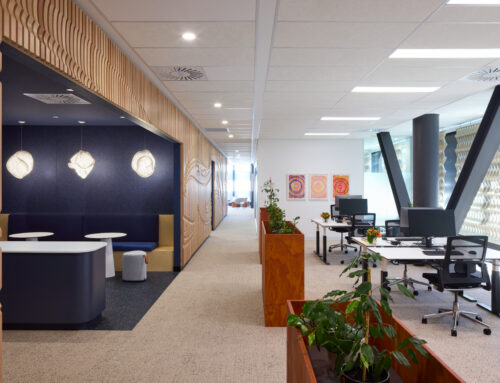
Gate 8 at 88 Jolimont Street was conceived by Geoff Harris and the Harris family as a legacy project with a clear purpose: to bring philanthropy, social enterprise and entrepreneurship together under one roof. The building’s name draws on something familiar to many Melburnians. At the nearby Melbourne Cricket Ground (MCG), the numbered gates are more than just entry points. They are well-known places to meet. That same sense of connection carries through to this project which welcomes a new community in East Melbourne.
The 6-storey building is home to a diverse mix of organisations, including not-for-profits, startups, SMEs and the Harris Family Office. Around a third of the space is dedicated to social enterprises and charities with an entire floor offered rent-free to groups such as STREAT and the Community Spirit Foundation.
Smart building technology is a central design feature at Gate 8. We began by mapping how people would interact with the building, from managing daily operations to visiting or working across different spaces. These insights shaped a connected platform that links mechanical, electrical, lighting, hydraulics, security, metering and solar systems through a single network.
The KODE platform provides a single point of building monitoring with building and system performance metrics designed to give the operations team a clear, easy-to-read view of how the building is operating. The building also includes a range of user-focused features such as mobile-based access, room and event bookings, visitor management, audio-visual systems and a building mobile app. These features help people interact intuitively with the building which includes many shared spaces such as a cafe, gym and event areas.
For the operations team, the platform provides real-time system visibility, centralised fault detection and diagnostic tools that help reduce the need for reactive maintenance. Data from building systems including the building management system (BMS), access control, lighting and emergency infrastructure, is brought together into a single interface, making it easier to manage and respond. For building managers balancing a wide range of responsibilities, the platform offers a single point of management that simplifies day-to-day oversight. This level of integration is uncommon in buildings of this size which are often delivered with a focus on immediate functionality rather than long-term performance.
In this case, smart building systems were considered from the outset as part of a broader strategy to create a building that’s efficient, adaptable and built around the people who use it. This design strategy also shows how smart building technologies can be scalable and adapted to suit smaller buildings and budgets.
Sustainability targets for the building include a 5 Star Green Star Design and As-Built rating and a 5 Star NABERS Energy rating. We worked with the project team early in the design to identify and integrate key strategies, including climate adaptation measures such as upsized HVAC systems and water access in plant rooms to support staff during periods of extreme heat. To help reduce greenhouse gas emissions associated with travel, e-bike charging is included in the end-of-trip facilities along with EV charging car parks and capacity for future expansion. Energy modelling was used to inform system selection and re-run during value management to reflect changes to help ensure sustainability targets could be maintained. A high-level life-cycle assessment was also completed early in design to identify environmental hotspots with the results used to guide decision-making and drive down environmental impacts by selecting low-impact materials.
As part of the value management process with the contractor team, the HVAC heating plant was electrified by using variable refrigerant flow (VRF) systems for the central heating and cooling plant. We reviewed and revised the layout with the mechanical contractor and advised on system selection and arrangement to support the building’s sustainability targets.
The final design of the air-handling systems includes demand control ventilation and economy cycle to improve energy efficiency and minimise running costs. The HVAC system design also supports a range of building uses including commercial kitchen exhaust, function and dining rooms, raised seating auditorium, car-park ventilation and tenant supplementary systems. To allow flexibility for potential future tenancy splits, the supplementary systems are arranged with dual entry points on each floor to minimise disruption. Door sensors are also integrated with the control systems to reduce energy use when terrace doors are left open, allowing the mechanical systems to adjust automatically to a naturally ventilated mode.
We designed the electrical layout to provide flexibility for the building’s future use. Each floor includes dual distribution boards, aligning with the mechanical strategy to minimise disruption if tenancies are split. Sub-metering is installed across key systems to support NABERS reporting and provide greater visibility over energy use throughout the building. A 20kW rooftop solar PV system contributes to the overall energy mix and is connected to the smart building platform for ongoing monitoring.
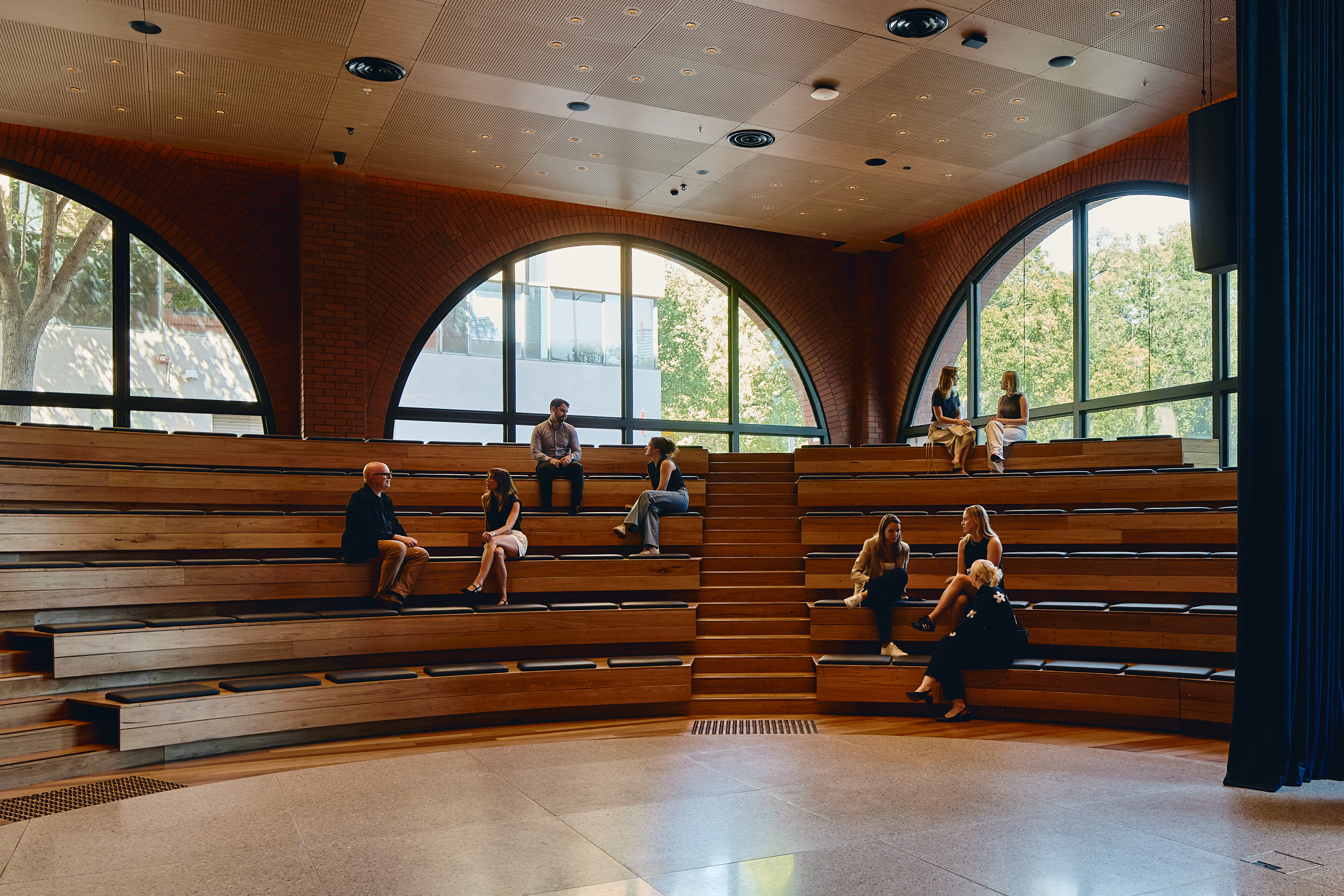
Our audio-visual design enables a range of functions across the building, from events and meetings to wellness and social spaces. On the ground floor, the auditorium includes a ceiling-mounted projector, integrated speakers, touch panel control and a hearing loop system that improves accessibility for people using hearing aids.
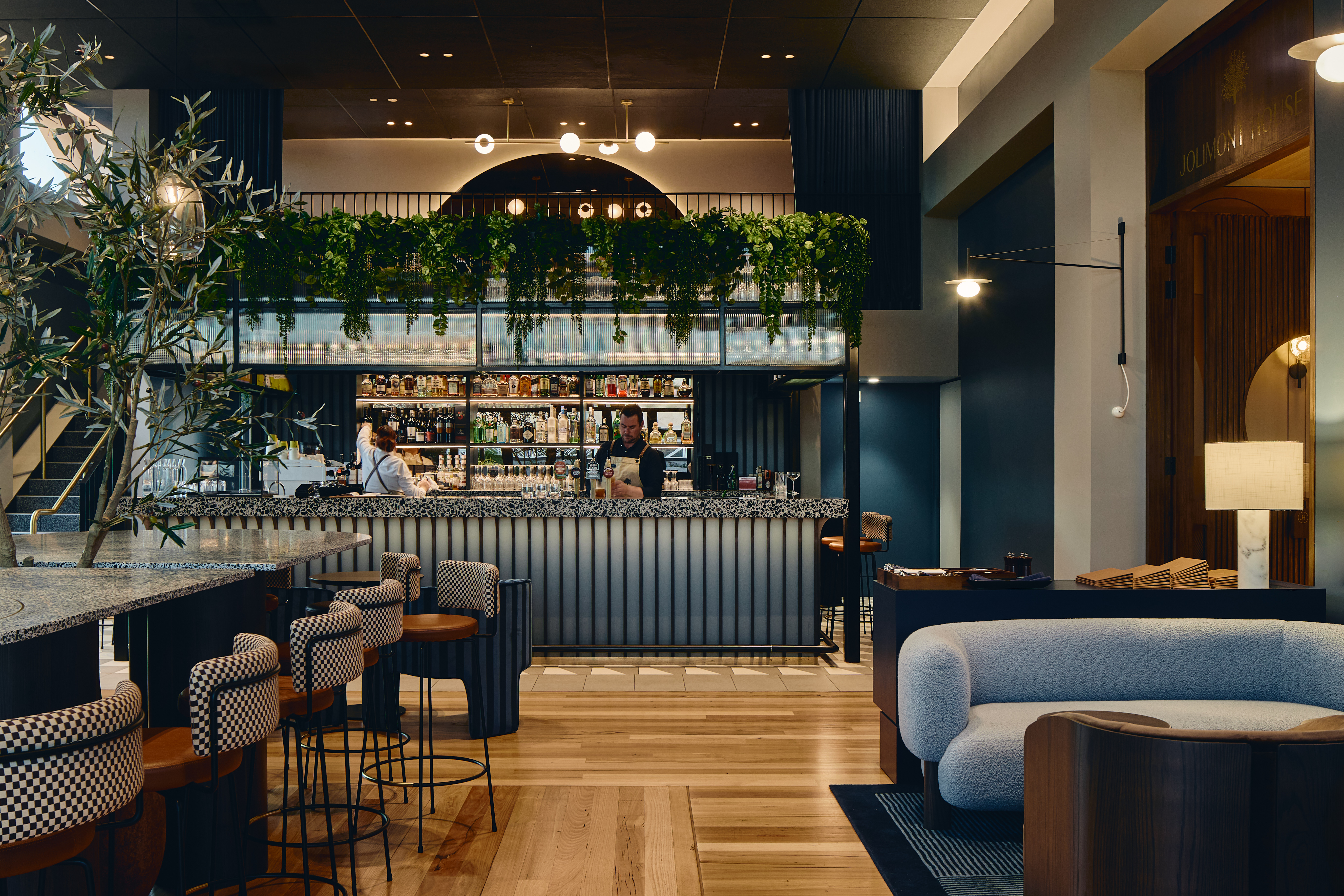
The adjacent community workshop area, intended for external hire, is equipped with a screen, camera and microphone for presentations and video calls. On level 1, the gym and yoga areas feature zoned audio to allow different sound settings across each space. Shared spaces such as meeting rooms, the dining and bar areas on level 6 and other collaboration zones are equipped with commercial-grade screens, microphones and speakers suited to their use.
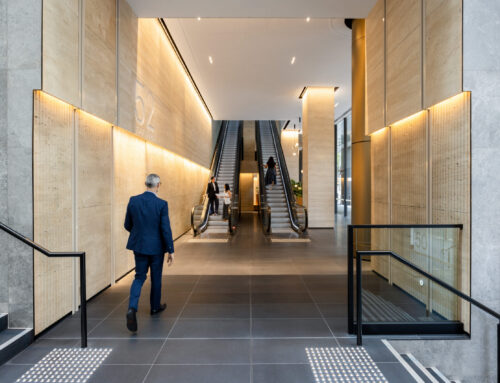
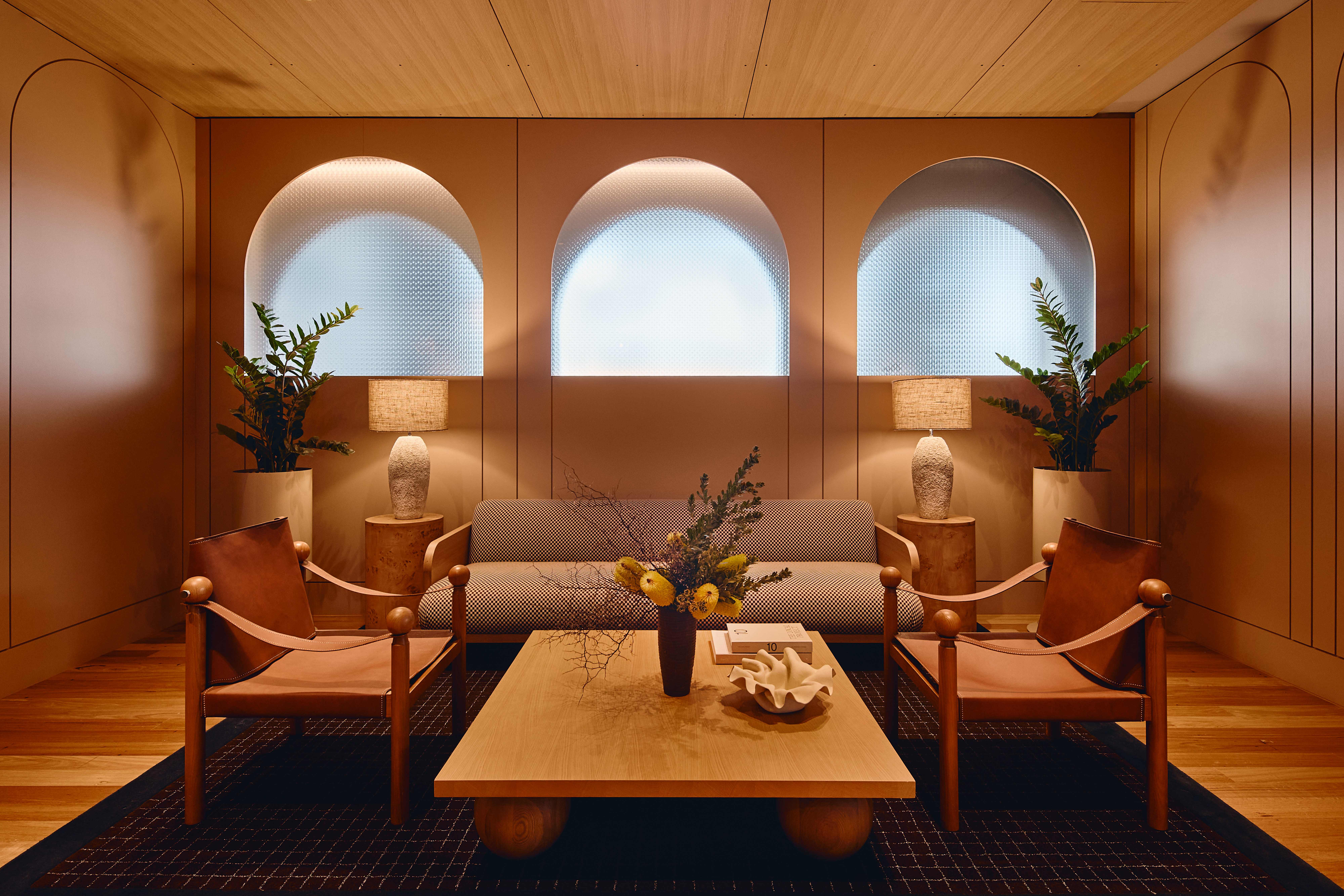
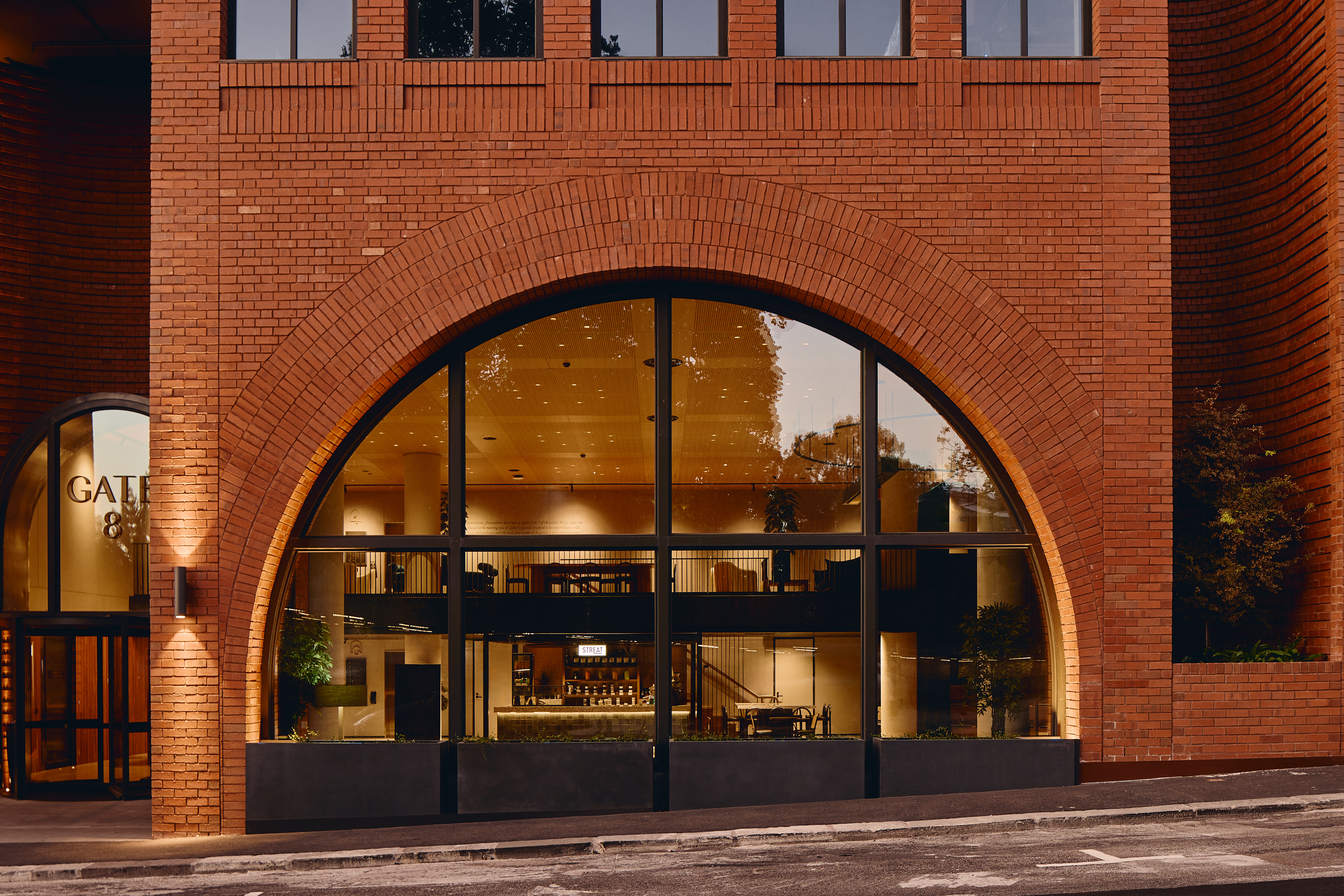
Lighting influences how people experience the building, particularly across the front-of-house areas. NDYLIGHT’s design focuses on performance and visual impact across the lobby, auditorium, meeting rooms, gym, terraces and the level-6 entertaining areas. While value management was applied to most areas, the lobby lighting was exempt, allowing visitors to be greeted by a feature pendant light that anchors the arrival experience. Uplighting is used outside along the facade to highlight the curved brick arches and emphasise the form and texture of the building in the evening. Other feature lighting elements are integrated with architectural details and help to visually soften built-in services such as plant boxes. Throughout the building, lighting has been considered not just for how it looks, but for how it helps shape the character and mood for each space.
As part of the fire engineering analysis and performance solutions, smoke lobbies are installed at each level to eliminate the need for a stair pressurisation system, meaning associated fans and plenums are no longer required.
This reduces the building cost (of additional fans, plenums, controls and annual testing) as well as giving usable floor area back to the client. Extended travel distances were resolved by adding smoke detectors at closer intervals to provide earlier warning for evacuation. As part of our fire engineering design, we also rationalised fire ratings across selected building components to simplify construction while still meeting compliance.
Fire protection for the building is delivered through a combined hydrant and sprinkler system served by a single water tank. During construction, updated fire brigade requirements introduced a challenge around the usable water volume of the installed tank. We resolved this by working with the site’s natural slope, positioning the tank below ground at a higher section of the site and the hydrant at a lower external point. This allowed the tank to remain below ground while still meeting compliance. We engaged directly with the fire authority to review the revised approach and agree on a solution that maintained design intent while avoiding changes to the above ground layout.
Water use across the building is managed through a combination of reuse systems and monitoring, which we specified as part of our hydraulics design. A greywater treatment plant recycles water from showers and sinks for toilet flushing and landscape irrigation with rainwater collection also forming part of the reuse strategy. Metering is included across both mains and recycled systems to help the operations team monitor usage and support sustainability targets.
To work within the limits of the available electrical supply, a natural gas connection was retained to serve the commercial kitchen and a small fireplace in the level-6 entertaining area.
Two lifts service the building from the basement to level 6. They include a split service with only the dual-entry passenger goods lift reaching all 3 basement levels. Both lifts service ground and the 6 upper levels. The design includes destination control, enabling basement access via the passenger goods lift and supporting operational needs alongside everyday use. Lift systems are integrated with the smart building technology and other building services, allowing mobile credential access and monitoring through the KODE platform.
Gate 8 brings something new to East Melbourne, not just in form but intent. It’s a place where the focus is firmly on the people and organisations working to create lasting change. By creating a space for collaboration and shared ambition, it supports the kind of work that has impact beyond its walls.
Images by Peter Bennetts.
Project Details
Market Sector:
Offices
Client: Harris Capital, H.Co. & Cobuild
Architect: Rothelowman
Contractor: Cobuild
Completion: 2024